
Platform
The predictive layer behind every shopper’s experience
Skubl starts with your store data, predicts what each shopper is likely to do and be worth, and uses those predictions to choose the pages, products and offers they see. Every change is measured against a holdout.
This page explains the parts underneath Skubl’s ecommerce personalization.

Illustrative example · sample store
Three parts, one model of every shopper
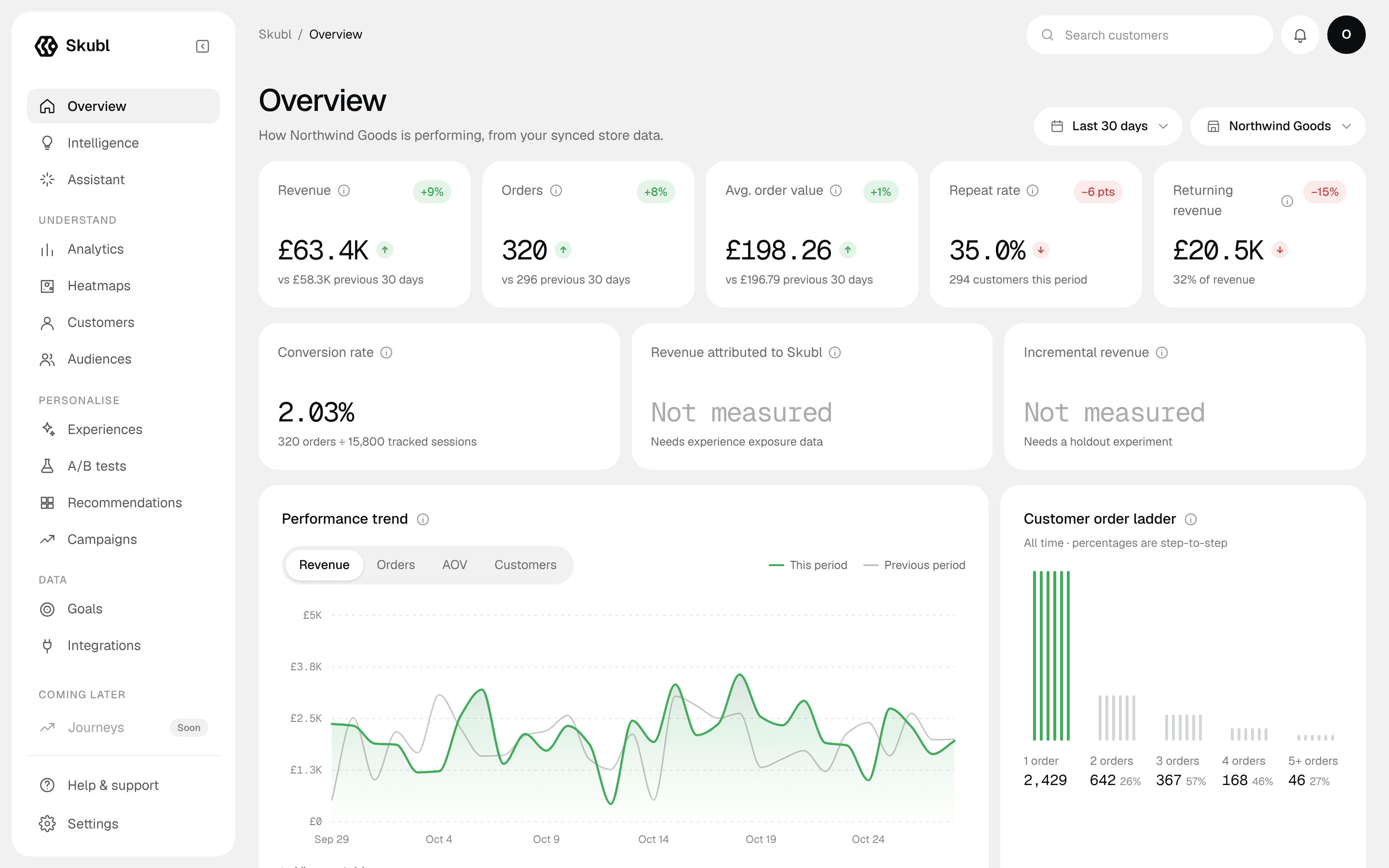
Inside the dashboard
Your store, measured honestly
Revenue, orders, AOV, repeat rate and returning revenue from your synced orders, each with its definition. Anything Skubl can’t measure yet says so instead of guessing.
The predictive models
Every shopper profile carries these scores, built from your store’s own customer and order data.
- Likelihood to buy
- How likely a shopper is to purchase in this session or soon after, used to decide when an incentive is worth offering.
- Churn risk
- How likely a customer is to stop buying, so you can act before they lapse.
- Predicted lifetime value
- How much a customer is likely to spend over time, so high-value shoppers get premium treatment from their first visit.
- Audience scores
- Scores that place each shopper in the audiences that matter to your business.
Platform FAQ
What data does Skubl use?
Products, customers and orders from your store through the native Shopify connector, plus on-site behavior recorded by the Skubl pixel (pageviews, clicks, scroll depth and conversions). See ecommerce CDP for how profiles are built.
How are predictions used?
Predicted likelihood to buy, churn risk and lifetime value decide which content, products and offers each shopper sees, within the rules you set.
Keep exploring
- Ecommerce personalizationHow Skubl personalizes the whole store.
- Product recommendationsRecommend what each shopper is most likely to buy next.
- Website personalizationAdapt the homepage, collections and landing pages to each shopper.
- Dynamic Yield alternativesCore capabilities without the enterprise implementation.

See the predictions on your own store
Connect your store to see likelihood to buy, churn risk and predicted lifetime value for your customers.
Prefer a walkthrough? Book a demo